Thursday, December 16, 2021

Walk with me: a Biography of Fannie Lou Hamer by Kate Clifford Larson

 2021, 322 pages, hardback, e-book.

Kate Clifford Larson explores the life of Mississippi sharecropper and civil rights activist Fannie Lou Hamer in this outstanding book that takes readers on the journey of a woman who was born into the grinding poverty and racism of the Mississippi Delta, and who rose to become the voice of the unheard and the conscience of a nation.

The 20th child of Mississippi sharecroppers, she had to quit school to work in the fields after sixth grade. When she tried to register to vote she was fired from her plantation job and kicked out of the house where she lived. Despite being arrested, brutally beaten, harassed by lawmen and the KKK, she persisted. Fannie Lou Hamer lifted up her voice!

Starting in the early 1960s and until her death in 1977, she was an irresistible force, not merely joining the swelling wave of change brought by civil rights but keeping it in motion. Working with the Student Non-Violent Coordinating Committee (SNCC), which recruited her to help with voter-registration drives, Hamer became a community organizer, women's rights activist, and co-founder of the Mississippi Freedom Democratic Party. She summoned and used what she had against the citadelher anger, her courage, her faith in the Bible, and her conviction that hearts could be won over and injustice overcome. She used her brutal beating at the hands of Mississippi police, an ordeal from which she never fully recovered, as the basis of a televised speech at the 1964 Democratic Convention, a speech that the mainstream partyincluding itsstandard-bearer, President Lyndon Johnsontried to contain. But Fannie Lou Hamer would not be held back. For those whose lives she touched and transformed, for those who heard and followed her voice, she was the embodiment of protest, perseverance, and, most of all, the potential for revolutionary change.

She was not well educated or a polished orator like many of her fellow activists, but her ability to empathize with the poorest Black men and women, long denied the ability to vote in the South, resonated profoundly throughout the region and rendered her one of the most effective speakers of all.

Hamer's big moment came as she told her life story on national TV as part of the effort to challenge Mississippi's all-White delegation to participate in the Democratic National Convention in 1964.  Her testimony, given while wearing a borrowed dress, eloquently described the oppressive system that kept Mississippi Blacks powerless, and poverty stricken. The group won the right to seat Black delegates at the 1968 convention, and Hamer even ran for office herself.

This very moving book raises important questions about leadership of social movements—should it be top-down, led by ‘elites’, should it be grassroots bottom-up led by ‘the people’ or a combination. A significant question we have yet to answer.

Saturday, November 20, 2021

Girl Waits with Gun, by Amy Stewart

"Girl Waits with Gun makes excellent use of history to put a fresh spin on classic cop-and-crook types. Amy Stewart s true-life protagonist is a rough and tumble version of the early twentieth century s New Woman. She is witty, sharply drawn, and suffers no fools! Suzanne Rindell, author of The Other Typist"  Google Books

Girl Waits With Gun is the 1st book in the Kopp Sisters series by NYT best-selling American author, Amy Stewart.   Fiction - 2015, 448 pages, paperback, audiobook, and e-book.  


Constance Kopp doesn’t quite fit the mold. She towers over most men, has no interest in marriage or domestic affairs, and has been isolated from the world since a family secret sent her and her sisters into hiding fifteen years ago. One day a belligerent and powerful silk factory owner runs down their buggy, and a dispute over damages turns into a war of bricks, bullets, and threats as he unleashes his gang on their family farm. When the sheriff enlists her help in convicting the men, Constance is forced to confront her past and defend her family — and she does it in a way that few women of 1914 would have dared. A fun book that touches on serious issues.


Saturday, November 6, 2021

Gendered Citizenship. The Original Conflict over the Equal Rights Amendment, 1920–1963, by Rebecca DeWolf

(350 Pages, published October 2021)


Want to understand the ERA better? 

By engaging deeply with American legal and political history as well as the increasingly rich material on gender history, Gendered Citizenship illuminates the ideological contours of the original struggle over the Equal Rights Amendment (ERA) from 1920 to 1963. A comprehensive, full-length history of that struggle, this book grapples not only with the battle over women's constitutional status but also with the more than forty-year mission to articulate the boundaries of what it means to be an American citizen. DeWolf explores how this conflict around the ERA ultimately became the defining narrative for the changing nature of American citizenship in the era.

"This changes the game, in terms of what we have at our disposal now to talk about the forces that have historically supported or rejected not only the ERA but the ideological positions that coalesce to support or reject the ERA...the book is important because it is an original way of looking at a topic that many folks think has been fully covered, but DeWolf’s book proves has been missing major pieces. The attention paid to this particular historical time period, and the particular lens of looking at the topic from the vantage point of emancipationism and protectionism, is extremely valuable as a contribution to the field. It is meticulously historically researched, using relevant primary source archives, and appropriate secondary sources where needed."  LAURA D'AMORE

Rebecca DeWolf is a writer and a historian with a PhD in American history. Her research has won recognition through grants and fellowships, including the Dirksen Congressional Research Grant. Her articles have appeared in the Washington Post, Frontiers, and New America Weekly.

read more about Rebecca DeWolf here:  https://www.rebeccadewolf.com/about-me


Monday, October 18, 2021

Three girls from Bronzeville: A Uniquely American Memoir of Race, Fate, and Sisterhood, by Dawn Turner

Review submitted by Joanne Shawhan, Zonta Club of Alban


Three girls from Bronzeville: A Uniquely American Memoir of Race, Fate, and Sisterhood by Dawn Turner, 2021, 320 pages, hardback, e-book, and audiobook.

In this memoir, journalist and novelist, Dawn Turner delivers an immersive and often heartbreaking portrait of life in the historic Bronzeville section of Chicago.  It offers a penetrating exploration of race, opportunity, friendship, sisterhood, and the powerful forces at work that allow some to flourish…and others to falter.

 They were three Black girls:  Dawn, her sister, Kim, younger by three years, and her best friend, Debra who roamed together the concrete landscape of Bronzeville, a historic neighborhood on Chicago’s South Side.  For a brief, wondrous moment the girls are all giggles and dreams and promises of “friends forever.” And then fate intervenes, first slowly and then dramatically, sending them careening in wildly different directions. There’s heartbreak, loss, displacement, and even murder. Dawn struggles to make sense of the shocking turns that consume her sister and her best friend, all the while asking herself a simple but profound question: Why? 

It’s at once a celebration of sisterhood and friendship, a testimony to the unique struggles of Black women, and a tour-de-force about the complex interplay of race, class, and opportunity, and how those forces shape our lives and our capacity for resilience and redemption.

Thursday, September 23, 2021

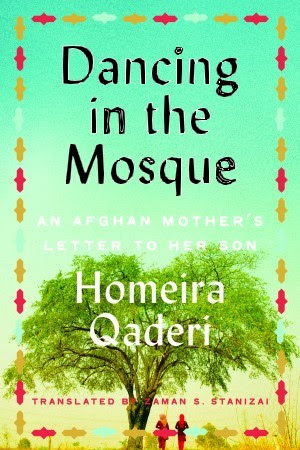
Dancing in the Mosque: An Afghan Mother's Letter to Her Son Book, by Homeira Qaderi

Publisher Harper Collins, December 1, 2020  

A book review, by Irene Orton

An exquisite and inspiring memoir about one mother’s unimaginable choice in the face of oppression and abuse in Taliban-controlled Afghanistan.

Time to share with everyone this great book that I just finished.  The title is:  Dancing in the Mosque by Homeira Qaden.  With all that is happening in Afghanistan I felt compelled to pick up this book in my local library.  I was not disappointed.


This 212 page book was compelling, as a courageous mother in Afghanistan she writes this memoir about the love she has for this child in a country that shuts women away from everything that we hold true and dear here in the United States.  I learned so much about society and the treatment of women in this country.  Homeira was no ordinary women, and she was constantly fighting for the rights of women in a very theocratic and patriarchal society.  At 13, she risked her freedom, and she defied the law to teach reading and writing to children.


This memoir is a letter to her son whom she was forced to leave behind.  This books serves as a wonderful invitation to reflect on the meaning of motherhood, sacrifice, and survival.  How far would we go to protect ourselves, our families and our dignity?


I could not put this book down!!!

Wednesday, August 11, 2021

THE GIRLS IN THE WILD FIG TREE HOW I FOUGHT TO SAVE MYSELF, MY SISTER, AND THOUSANDS OF GIRLS WORLDWIDE, by Nice Nailantei Leng'ete

(Written BY NICE LENG'ETE WITH ELIZABETH BUTLER-WITTER)  

 RELEASE DATE: SEPT. 14, 2021


Review by - https://www.kirkusreviews.com

An inspirational memoir from a human rights activist who has devoted her life to fighting female genital mutilation.

The author is a member of the Maasai tribe, born in the small Kenyan town of Kimana, and she evocatively explores the culture of her people. Historically, Maasai men are known as fierce warriors who protect their people and animals, while Maasai women serve as the caregivers of the house and children. A community bound by tradition, they live in hand-built circular homes and raise cattle as the primary food source. 


When they are young, children have one of their cheeks branded by a hot coil of wire; the scab creates a circle that serves as “a special symbol to mark us as Maasai.” When it was Leng’ete’s turn, she ran away, and she “still [has] no marks.” Another tradition is referred to as “the cut.” During this ceremony, the women subject the young females to a procedure in which their clitoris is either cut or removed completely—without anesthesia. 

Leng’ete refused to undergo FGM. “I loved my family. I loved my people. But this, I thought, was wrong,” she explains. “Tradition can be good. Tradition can be beautiful. But some traditions deserve to die.” Following her defiant act, she was shunned. With urgent, shocking, and heartbreaking detail, Leng’ete brings readers into her life. Beginning her work with the African Medical and Research Foundation when she was still a teenager, she found her calling. Armed with scientific evidence about the significant health risks associated with FGM, Leng’ete returned to her community in hopes of instilling change. Due in part to her relentless efforts, tribal leaders “changed the Maasai constitution to reflect our commitment to end FGM.” Leng’ete was also awarded the black walking stick, a symbol of leadership not normally given to women. She went on to campaign globally, including building A Nice Place in Kimana, “a safe haven for girls fleeing FGM."

An incredibly powerful story that offers real hope for the future.

Monday, July 5, 2021

Minor Feelings: an Asian American Reckoning

by Cathy Park Hong, 2020, 206 pages, paperback.

The poetry editor of the New Republic discusses her experiences living and working in a culture hostile to expressions of Asian individuality and identity. In this memoir in essays, Hong offers a fierce and timely meditation on race and gender issues from her perspective as a Korean American woman. Candid and unapologetically political, Hong's text deftly explores the explosive emotions surrounding race in ways sure to impact the discourse surrounding Asian identity as well as race and belonging in America.